





Roots & Receipts: Inside Dhurthi's sustainable ecosystem
The Tyre That Became a Bag: How Dhurthi Collective Is Engineering Sustainability
There is a bag sitting on a shelf in Indiranagar that used to be a tyre. Not metaphorically. Literally a tyre, before it goes to a landfill and worked into something that looks and feels like leather.
Antra Bhargava, the founder of Dhurthi Collective, and Bhoomiverse built a circular economy unit around materials most manufacturers have written off. She studied design in Milan, returned to India, and started working with discarded cycle tubes and car tyres. The two are not the same material. Different thickness, different durability, different behaviour under a blade or a needle. Her team of artisans, many of them retrained leather workers, had to develop new techniques for cutting, stitching, and finishing rubber into products that hold up to daily use.
Dhurthi now produces bags, backpacks, laptop sleeves, corporate kits, and furniture from recycled tyre tube. The rubber is paired with upcycled denim, canvas, and other textile discards. Sourcing the material consistently requires ongoing research. Making it work at a production level requires trial. The sustainable angle is real, but it is secondary to the engineering problem Dhurthi is solving every time they make something new.
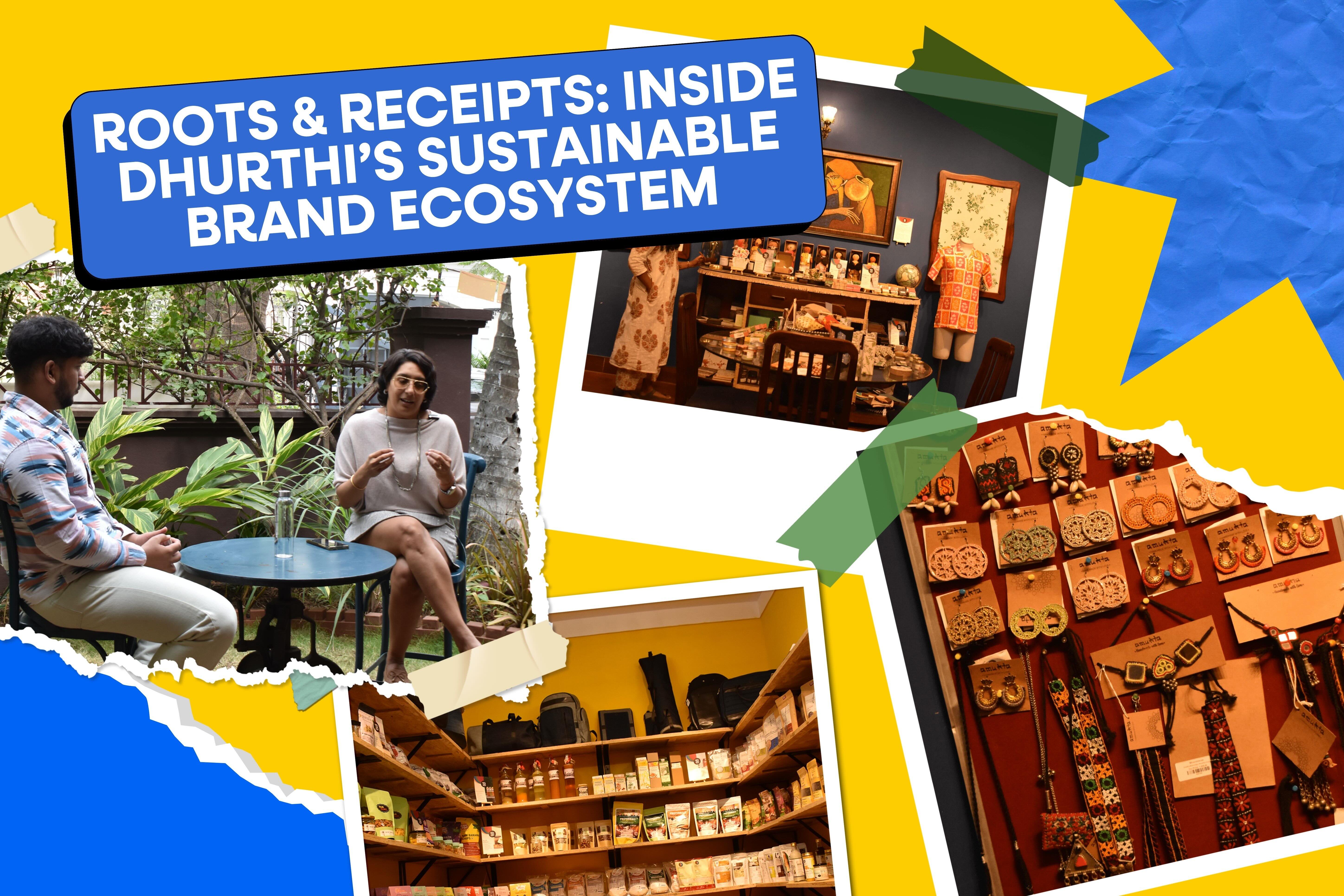
Then there is Bhoomiverse, the multi-brand sustainability store Dhurthi opened in Indiranagar in March 2025. About 95% of the building materials came from pre-landfill or reclaimed sources. The furniture is repurposed wooden pallets. The store itself is a demonstration of the model.
Inside, Dhurthi's tyre-tube products share shelf space with over a dozen other brands: The Huda Bar, Hibiscus Heroes, Kaashi Farms, Bunaavat sarees, Islands of Loom, Décor by Saanjh, HempZero, Bare Necessities, Aulerth, Turtle Tales, and others. Each has been assessed against at least one of the seventeen UN Sustainable Development Goals. The store covers food, fashion, home, and lifestyle under one roof.
What sets Dhurthi apart from most sustainable brands is the structure. Antra is not just building a brand. She is building a shared ecosystem, shared sourcing, shared learning, multiple conscious brands growing in the same direction rather than competing to out-sustain each other. That model is more realistic than the idea of one brand getting everything right on its own, and it is harder to replicate through marketing alone.
Her stated goal is to make ethical consumption normal. Not aspirational, not a lifestyle statement. Just a regular way to buy things. Younger consumers are increasingly asking the questions that make greenwashing harder to sustain- where did the material come from, how was it made, who benefits. Brands that can answer those questions are in a different position than brands that cannot. The future of the sustainable market will not be decided by who tells the best story. It will be decided by who can back it up.